
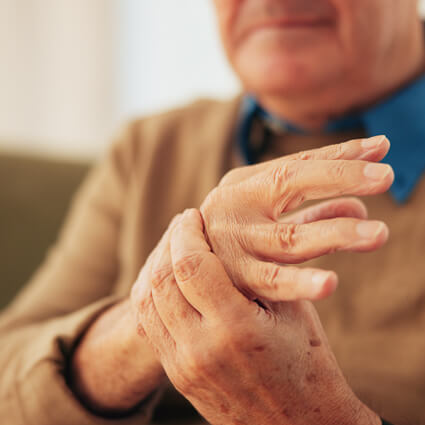
Thumb arthritis is one of the most common reasons people develop pain at the base of the thumb. It usually affects the carpometacarpal joint, also called the CMC joint or basal joint, which sits near the wrist and allows the thumb to pinch, grip, twist, and grasp. Because this joint is involved in so many everyday tasks, even mild irritation can make opening jars, turning keys, writing, lifting pans, or holding a phone feel uncomfortable.
Many people first notice thumb arthritis symptoms gradually. There may be a mild ache after using the hand, stiffness first thing in the morning, or reduced strength when pinching objects. Over time, the pain can become more frequent, the joint can feel swollen or tender, and the base of the thumb may start to look enlarged or bony.
The good news is that early conservative care often helps. Search-leading medical sources consistently prioritise activity modification, splints, pain relief strategies, exercises, and—in more persistent cases—injections or surgery.
What Is Thumb Arthritis?
Thumb arthritis is most often osteoarthritis at the base of the thumb. It develops when the cartilage that cushions the joint begins to wear down. As that protective cartilage thins, the joint surfaces no longer glide smoothly, and the bones begin to rub against each other more directly. That can lead to pain, stiffness, swelling, and reduced movement.
You may also see the condition described as basal joint arthritis or thumb CMC arthritis. Those terms all refer to the same general problem: wear-and-tear change in the joint at the base of the thumb.
Thumb Arthritis Symptoms
The most common thumb arthritis symptoms are pain and tenderness at the base of the thumb, especially during gripping, pinching, twisting, or opening objects. Pain after prolonged use is common in earlier stages. As the condition progresses, pain may become more regular and everyday hand function can become more limited.
Common symptoms include:
- Pain at the base of the thumb when gripping or pinching
- Swelling, stiffness, or tenderness around the joint
- Loss of pinch strength or grip strength
- Aching after using the hand for longer periods
- Reduced thumb range of motion
- An enlarged joint or a bony bump at the base of the thumb
- Grinding or creaking in the joint with movement in some cases
Thumb Arthritis Causes
The main cause of thumb arthritis is cartilage wear over time. The joint at the base of the thumb is used constantly, so age and repeated use gradually increase stress on it. That is why the condition becomes more common as people get older.
Other common thumb arthritis causes include prior injury, fracture, ligament damage, repetitive hand strain, and inherited joint mechanics that make the basal joint less stable. Women are affected more often than men, and several major sources note that thumb arthritis becomes more common after age 40.
In practical terms, risk tends to be higher if you:
- Are over 40
- Are female
- Have a history of thumb injury
- Use your hands repeatedly for gripping, pinching, twisting, tools, texting, or manual work
- Have a family history of osteoarthritis or joint laxity
How Thumb Arthritis Is Diagnosed
Diagnosis usually starts with a detailed history and physical examination. Clinicians look at where the pain sits, what movements aggravate it, whether grip and pinch are weaker, and whether there is tenderness or grinding at the base of the thumb. A commonly described assessment is the CMC grind test, where pressure and movement reproduce pain or a gritty sensation. X-rays are often used to confirm joint changes such as narrowing, spurs, or degeneration.
It is also important to distinguish thumb arthritis from other common causes of thumb-side pain, including De Quervain’s tenosynovitis. That matters because the treatment approach is not always the same.
Thumb Arthritis Treatment And Relief
Activity Modification
One of the simplest forms of thumb arthritis relief is reducing the movements that repeatedly irritate the joint. That does not mean stopping use altogether. It means using larger handles, avoiding prolonged tight pinching, spreading load across both hands, and changing how you open jars, carry pans, or hold devices. NHS and arthritis resources commonly recommend joint protection rather than total rest.
Splints And Bracing
A thumb splint or thumb spica support can reduce strain on the CMC joint and often helps during flares or aggravating tasks. Major clinical sources list splints as a common first-line option, and Reddit discussions show braces are one of the most frequently used real-world supports for day-to-day symptom control.
Medication And Simple Home Relief
Conservative thumb arthritis treatment may also include NSAIDs, simple pain relief, heat, ice, or topical treatments, depending on what suits the person and what their clinician advises. Heat often helps stiffness, while ice can help after irritation or swelling.
Injections
If symptoms are more stubborn, corticosteroid injections may be recommended. Leading medical sources note that injections can provide temporary relief, although their benefit can lessen over time. Reddit discussions reflect that mixed experience: some people report meaningful relief, while others say the benefit was brief or limited.
Surgery
Surgery is usually considered when conservative care no longer gives enough relief and daily function is significantly affected. Search and community discussions both show that surgery can help, but recovery is often longer than people expect.
Thumb Arthritis Exercises
Thumb arthritis exercises are widely recommended because the aim is not only to reduce pain but also to maintain movement, coordination, and support around the joint. Arthritis organisations and Mayo Clinic hand exercise resources repeatedly emphasise slow, controlled movements that do not sharply increase pain.
Helpful exercise categories include:
- Thumb Opposition
Touch the tip of the thumb to each fingertip one at a time. This helps maintain fine motor control and thumb movement. - Thumb Stretch Across The Palm
Move the thumb across the palm and then back out again. This is a commonly recommended mobility exercise for the thumb. - Thumb Stabilisation
Mayo Clinic’s hand exercise guidance includes thumb stabilisation work that mimics gently wrapping the hand around a can or bottle and returning to neutral. The goal is controlled support rather than forceful strengthening. - Gentle Band Or Isometric Work
NHS and arthritis rehabilitation leaflets commonly include light strengthening for the muscles at the base of the thumb, but the loading should be modest and tailored to irritability.
The key point is to avoid forcing painful movement. If exercises flare the joint sharply, they need to be adjusted. For many people, exercises work best alongside splinting, joint protection, and activity changes rather than on their own.
Daily Tips For Thumb Arthritis Relief
Small changes often make everyday life easier with thumb arthritis. Try using pens and kitchen tools with thicker handles, using both hands instead of one where possible, and limiting long bursts of texting or scrolling. Community discussions repeatedly highlight adaptive tools, braces, and task modification as practical ways to reduce flare-ups.
When To Seek Professional Advice
You should seek professional assessment if Thumb Pain is persisting, if grip or pinch strength is noticeably dropping, if the joint is enlarging, or if symptoms are affecting work, sleep, writing, lifting, or cooking. Persistent base-of-thumb pain can also overlap with other issues, so getting the diagnosis right matters.
For Flynn Chiro, the safest and most accurate positioning is to frame care around assessment, conservative support, and referral when needed. Thumb pain may respond well to advice on load management, movement, neighbouring wrist and hand mechanics, and gentle exercise progressions, but some cases are better managed alongside a GP, hand therapist, or hand surgeon depending on severity.
Final Thoughts
Thumb arthritis is common, but it is also manageable. Early recognition, simple joint protection strategies, sensible exercise, and the right professional input can make everyday tasks much easier.
FAQs
What are the first signs of thumb arthritis?
Usually pain at the base of the thumb during pinching, gripping, twisting, or opening jars, followed by stiffness, swelling, or reduced pinch strength.
What causes thumb arthritis?
Most cases are caused by osteoarthritis at the thumb CMC joint. Age, repeated use, previous injury, genetics, and female sex are all recognised risk factors.
What is the best treatment for thumb arthritis?
There is no single best treatment for everyone. Conservative care usually starts with activity changes, splints, pain relief strategies, and exercises. Injections or surgery may be considered if symptoms remain limiting.
Do thumb arthritis exercises really help?
They can help maintain movement and function, especially when done gently and combined with other conservative strategies such as splinting and joint protection.
Is thumb arthritis the same as De Quervain’s?
No. They can both cause pain near the thumb, but thumb arthritis affects the basal joint, while De Quervain’s affects the tendons on the thumb side of the wrist.
When is surgery needed for thumb arthritis?
Usually only when non-surgical treatment is no longer giving enough relief and the pain or loss of function is significantly affecting daily life.